- Home
- Running Psychology
- Runners High
Runners High: What It Is, Why It Happens, and How to Experience It More Often
Have you ever had a run where everything suddenly felt effortless? When your body moved lightly, your breath fell into a natural rhythm, and you slipped into a peaceful, joyful flow?
That uplifting, almost euphoric state is commonly called runners high.
Not everyone experiences it every time—and for some, it’s elusive. But when it happens, it can make running feel magical.
This article blends the science behind runners high with mindful running techniques to help you understand it—and experience it—more often.
Free Running Form Template
A simple breakdown of what good running form actually involves. It comes by email when you join the newsletter.
The Science Behind Runners High (Explained Simply)
For many years, people believed runner’s high was caused by endorphins, the body’s natural painkillers.
But scientists have discovered something surprising: endorphins don’t cross the blood–brain barrier.
This means they can’t create the euphoric, calm feeling runners describe.
Instead, modern research points to a different group of chemicals:
Endocannabinoids — the real source of runners high
The key one is anandamide (often called the “bliss molecule”).
Research shows that moderate, sustained aerobic exercise, such as steady-pace running, significantly increases levels of endocannabinoids in the bloodstream (Raichlen et al., Journal of Experimental Biology, 2012).
When you run at a steady, moderate pace for long enough, levels of these chemicals rise, creating:
- reduced anxiety
- lower perception of pain
- a sense of calm
- improved mood
- a sense of light, effortless movement
Studies in humans and animals show that blocking endorphins does not remove runners high… but blocking endocannabinoid receptors does.
In other words:
Runners high is a neurochemical shift triggered by sustained aerobic running.

What Runners High Feels Like
Have you ever experienced runners high? If you have, you know how great it feels. When it happens, your whole experience shifts:
- Your body feels lighter—almost as if you’re gliding.
- Breathing feels natural and unforced.
- Your mind quiets, and you may feel more focused or open.
- Discomfort fades into the background.
- You feel in tune—a powerful mind–body connection.
- Running becomes a joyful, meditative movement.
- Time seems to pass by more quickly
Some runners describe it as “effortless energy.” Others say it’s a sense of calm, relief, or clarity.
Every experience is a little different—and that’s part of its mystery.
Generally, when runners experience "being in the flow," there seems to be a highly coordinated flow between mind and body and running feels effortless. Our body can feel like it is moving to a rhythm of its own. There is a feeling of euphoria and total bliss as the mind and body are totally in sync.
In this flow state, time and miles pass by easily. And because it feels effortless, injuries are not a concern. After running we feel rejuvenated rather than tired, sore and exhausted.
This blend of physical ease and mental spaciousness is what makes runners high feel so special.
Many runners have experienced this state from time to time, but most cannot tell you how or why it happened. The following practice will increase your chances of getting in the flow more often.

How to Increase Your Chances of Experiencing Runners High
Runners high isn’t guaranteed. But certain conditions—both physical and mental—make it much more likely.
A. Physical Factors That Make Runners High More Likely
1. Run long enough
Most research suggests 45–70 minutes of steady, continuous running works best.
2. Run at a moderate, conversational pace
Not too hard. Not too easy.
You’re looking for that sustainable, rhythmic effort.
3. Let your body find its natural rhythm
Give yourself 10–15 minutes for breath and stride to settle in.
4. Run consistently
Regular aerobic running increases the body’s ability to produce endocannabinoids.
5. Choose routes that feel good
Monotony can help (easier to stay in rhythm). Nature can help (elevates mood). Choose what supports your flow.
B. Mindful Running Techniques
1. Connect with your breath
Use your breath as a steady anchor. Let it guide you.
2. Feel your body as a unified whole
Notice how your feet land, how your arms swing, how your body moves in harmony.
3. Observe without judgment
If thoughts arise, acknowledge them and return to awareness.
4. Shift from “doing” to “being”
Allow running to become a flow of movement rather than an effort or task.
5. Practice presence
When I step back mentally and observe myself running, the experience becomes deeper and more peaceful. For me, it's a very effective way to quickly become more fully present in the moment.
6. Let joy surface naturally
Runner’s high is not forced. It arises when both the body AND the mind soften into the moment.
Used together, these practices help create the mental and physical conditions for a runners high to emerge naturally.
The Runner's High Quick Guide
Would you like a free copy of my Runner's High Quick Guide? Sign up for The Peaceful Runner Newsletter below and get instant access.
Join the newsletter and the template comes by email.
Why You Might Not Feel Runners High (Yet)
Common reasons:
- Runs are too short
- Pace is too fast or too slow
- Inconsistent training
- High stress levels
- Overthinking or “trying too hard”
- Fatigue, illness, or hormonal shifts
And sometimes…
Runners high just doesn’t happen that day.
And that’s okay. Running still nourishes your body and mind.
Benefits of Runners High
- Improved mood
- Reduced anxiety and stress
- Reduced perception of pain
- Stronger motivation to run
- Feelings of clarity and calm
- A more joyful relationship with running
- Support for long-term mental well-being
A Simple Routine to Cultivate Runners High
- Warm up slowly for 5–10 minutes
- Settle into a conversational pace
- Relax your shoulders and soften your face
- Bring mindful attention to your breath
- Run 45–70 minutes, staying steady
- When thoughts come—observe, release, return
- Finish with gratitude for the run
1. How long does it take to get runners high?
1. How long does it take to get runners high?
Most runners experience runners high only after 45–70 minutes of steady, moderate-intensity running. It usually doesn’t appear during very short runs because your body needs time to build up endocannabinoids — the chemicals linked to the “high.” However, the timing varies from person to person.
2. What causes runners high — endorphins or endocannabinoids?
2. What causes runners high — endorphins or endocannabinoids?
Modern research shows that endocannabinoids, not endorphins, are the main cause of runner’s high. Endorphins can’t cross the blood–brain barrier, but endocannabinoids (especially anandamide) can — creating the calm, euphoric sensation many runners describe.
3. Can beginners experience it?
3. Can beginners experience it?
Yes, beginners can experience runners high — but it’s less common at first. Your body becomes better at producing endocannabinoids as your aerobic fitness improves. With regular running, beginners often start feeling the high more easily over time.
4. Does walking or cycling produce the same effect?
4. Does walking or cycling produce the same effect?
Yes, other rhythmic aerobic activities like cycling, hiking, swimming, and brisk walking can trigger a similar response. Running is most commonly associated with the “high,” but the same endocannabinoid system is activated in other endurance exercises.
5. Why don’t I feel runners high every time?
5. Why don’t I feel runners high every time?
Runners high depends on several factors — pace, duration, stress levels, sleep, and even your mindset. If you’re tired, rushed, or pushing too hard, the conditions may not be right. Even experienced runners do not get runner’s high on every run, and that’s completely normal.
6. Is it safe to chase runners high?
6. Is it safe to chase runners high?
Yes — runners high itself is safe. The only risk is overtraining if you push your body too hard trying to reach it. The best approach is to enjoy your run, stay consistent, and let the high come naturally when conditions are right.
7. How long does runners high last?
7. How long does runners high last?
Runners high usually lasts from a few minutes up to about an hour, depending on the person and the run. The mood boost and sense of calm may linger longer, especially if you cool down gently and stay mindful after your run.
Conclusion
Runners high is a beautiful blend of body chemistry and mindful awareness.
You cannot force it—but you can create the right conditions for it to arise.
Every run is an opportunity to practice presence, find your rhythm, and reconnect with yourself.
If you try these practices, I’d love for you to share your experience in the comments below.
Happy running!
You may also be interested in these articles:
Experience Runners High More Often
Back to the top of Runner's High
Return to Running Psychology
- Home
- Running Psychology
- Runners High
NEW FEATURE - DISQUS COMMENTS!
Login using Facebook, Twitter, Google or Disqus.
Want my writing to find you more easily?
Add The Peaceful Runner as a preferred source on Google

FTC Disclosure: As an Amazon Associate, I earn from qualifying purchases. Learn more


Recent Articles


-
How I Stopped Forcing My Running Form
Oct 08, 26 12:16 PM
Proper running form, and a gentler way to find it -
Feldenkrais for Runners: The Method That Changed How I Run
Sep 20, 26 10:01 AM
Feldenkrais for runners teaches you to feel how you move, so restriction releases and a niggle stops becoming an injury. Has a five-minute practice to try. -
My Back Healed, and It Changed How I Run
Sep 15, 26 02:07 PM

Why I recommend this online Feldenkrais running course to runners who keep getting hurt. -
Six Hot Runs in Protaras, and the Quiet Trail I Found
Aug 31, 26 12:35 PM

Running in Protaras in July heat. The busy boardwalk north, the quiet gravel trail south towards Green Bay, and how to stay present when it is hot. -
An Honest Note About Runners Trots, and What I Am Beginning to Suspect
Aug 05, 26 10:22 AM

A personal story from a Saturday morning parkrun, and what I am beginning to suspect about the connection between fear, tension, and cramping. -
Josh Kerr's Training Routine: The Foundations of a Mile World Record
Jul 20, 26 06:04 AM

Josh Kerr just broke the mile world record. He ran 3:42.66 in London Saturday, taking down a mark that stood for 27 years. -
Introducing The Peaceful Runner Method Workbook
Jul 08, 26 06:01 AM

Announcing The Peaceful Runner Method Workbook, a mind-body guide for runners who keep getting hurt. Learn eleven simple practices for running injury-free. -
How to Listen to Your Body When Running
Jun 20, 26 09:44 AM

A true story about a stubborn ache and what listening to my body taught me. -
How To Prevent Running Injuries - 7 Lessons
Jun 05, 26 12:50 PM

Seven things I have learned about running injuries that most runners are never told. -
Why More Runners Are Switching to Toe Socks
May 04, 26 02:04 PM

Toe socks might look a little unusual at first, but more and more runners are making the switch. They can make a meaningful difference to your running comfort and performance.

Free Running Form Template
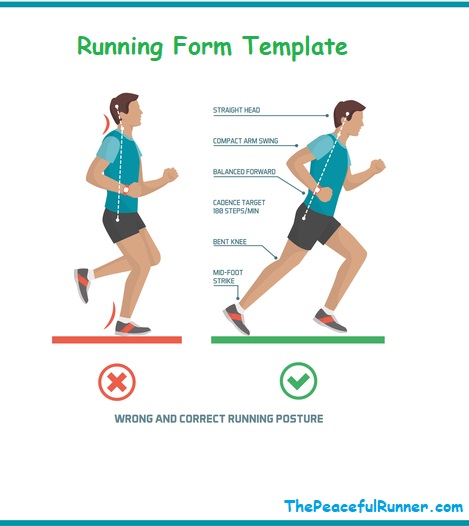
Get the running form template now!
My template provides a straightforward explanation of the components of good running form, eliminating any confusion about how to improve your running technique.
Hate bulky phone holders
that bounce and slip?

The #PRPocket clips securely to the inside of your waistband.

Try our Guided Running Meditation to become a peaceful, happy and injury free runner.
© Copyright 2010-2026, By Jackie Linehan, RTTP, C.Hyp, ThePeacefulRunner.com.
All Rights Reserved.
Home | About Me | Search | Site Map | Contact Me | Privacy Policy | Disclaimer | Terms and Conditions